Friday, May 13, 2011

Aphrodite's Rosy Inspiration


Born in a bubble bath. Aphrodite's name is derived from the Greek word “aphros” meaning foam from the sea.

It is no secret that rose is her blossom! The story of her naming the rose. The tale of how her love, blood and tears created the first red rose bloom itself. This is the stuff that legends are made of.

Being a Greek gal in the Pantheon with Athena, she's gotta know well that Olive Oil is great food for all divine bodies, inside and out.

Aphrodite is a Goddess known for her hot, passionate style. I love to muse about her beauty routines, and on Friday, in honor of this saucy, sea spawned seductress, my muse and I created Pure Rose & Olive Castile Soap. Gorgeous enough for the Goddess of Beauty in all of us!

Click Here To Order!

Tuesday, May 10, 2011

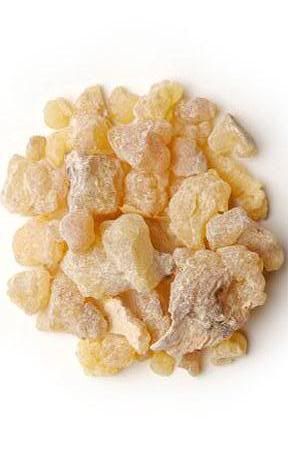
Certified Organic Frankincense Hydrosol


ULTRA FRESH! Frankincense Carterii Hydrosol - Certified Organic and Artisan Distilled in the USA.

Makes a beautiful linen spray and room perfume. Helps promote a calming and spiritual energy in any space.

For personal use, author, Suzanne Catty sites Frankincense Hydrosol as quite beneficial for those ailing from infections of the mouth and/or gums; gargle or rinse after brushing.

It also functions as a gentle skin toner, particularly suited to those in humid climates and with mature skin; has anti-aging properties.

Limited Quantities Available!
Click Here To Order

Sunday, May 8, 2011

Making Herbal Labna Cheese

One from the Archives; many moons ago with my elder son :) Happy Mother's Day to all the mamas and everyone's mama!

Labna is a traditional soft cheese from the Middle East that is made with yogurt. We've made our Labna with kefir we cultured ourselves from local raw goat's milk. Kefir is a cultured milk product that is similar to yogurt, but has a wider variety of micro-organisms.

This cheese is very easy to make, in fact, my 5 year old has prepared the cheese for this article.

For this you'll need the following clean (sterile) materials:

Kefir (or Yogurt)
Work Bowls
Strainer
Linen cloth (do not use grocery store "cheesecloth" - a birdseye weave cloth diaper works well as does a white cloth napkin)
Fresh herbs of choice (chopped)

1gettingready.jpg 1. Getting Ready

Assemble your materials. Make sure your hands and all of your materials are as clean as possible.


strainer.jpg 2. Prepare For Straining

Place a strainer into one of the work bowls. Line strainer with the linen cloth.


straining1.jpg 3. Straining

Slowly pour the kefir (or yogurt) into the linen lined strainer.


hanging1.jpg 4. Making a Hanging Bag

Gather all edges of the cloth to make a bag and tie up the cloth at the top.


hanging2.jpg 5. Tying the Bag

Now your bag of cheese to be is ready for hanging to let the whey drain.


hanging3.jpg 6. Draining The Whey

Let the bag hang overnight. Be sure to place your bag over a bowl to catch the draining whey.

Tip: Whey can be saved in a jar and refrigerated for a variety of uses,
including lacto-fermenting vegetables (pickling), making bread, cooking pastas in, etc ... Don't throw it a-whey :-D


scooping1.jpg 7. The Next Day

Open the linen cloth and using a rubber or silicone spatula scrape the drained curds from the inside of the cloth.


scooping2.jpg 8. Gathering The Cheese

It doens't look like a lot when you open the cloth, but as you can see, it starts to pile up.


mixing1.jpg 9. Making It Smooth

Now its time to mix the cheese to get a smooth cream cheese like consitency.


herbs1.jpg 10. Adding Herbs

At this point chopped herbs can be added. We used green onions for this batch.
(Note: Adding herbal and fruit jellies are also a delicious option.)


herbs2.jpg 11. Mixing The Herbs

Mix the herbs in well.

The cheese can be kept cream cheese style and smeared onto bagels, flat bread (pita), toast rounds, crackers, etc ...

It can also be rolled it into small balls and covered with olive oil and stored in a sealed container.
Another variation is to shape the cheese into a log and roll it in chopped nuts.
(Note: The cheese is easier to shape if refrigerated a bit first.)


eating.jpg 12. Enjoying

Enjoy ...this cheese is being munched on a whole grain cracker. Yummy!

The cheese will last refrigerated for about a week (if it doesn't get all eaten up in the first day ;)


by Christine Ziegler - © 2004 - Author's Bio: Chris has studied the art of cooking as an apprentice to a Pastry Chef and a Sous Chef in 2 Manhattan restaurants. She is the owner of A Little Ol'Factory ~ http://www.alittleolfactory.com ~ where she sells exceptional quality essential oils for Aromatherapy, makes olive oil based soap, all natural toiletries and teaches classes about Soap Making and Essential Oils.

Saturday, May 7, 2011

Essential Mother’s Day Feast


Essential Mother’s Day Feast

This month we celebrate Mom and all that she has given us. If nothing else, she gave us life, what we chose to do with it from there is our own business. In return for that wonderful opportunity, making a scrumptious feast is a very nice gesture that everyone gets to enjoy.

Let us get right down to the recipes as this is a feast for 4 that will take some advanced preparation time:

Baby Greens Salad With Warm Basil Vinaigrette

Baby Greens Salad

4 cups loosely packed baby greens salad mix

1 cup croutons

1-2 oz crumbled Feta Cheese

Toss all ingredients well. Drizzle lightly with Warm Basil Vinaigrette

Warm Basil Vinaigrette

2 Tbsp finely diced shallots

1 cup Basil Flavored Olive Oil* (recipe follows)

¼ cup Red or White Wine Vinegar

Salt and Pepper to taste

Warm olive oil slightly over low heat. In a shaker bottle or in a bowl with a whisk blend all dressing ingredients well. Drizzle over salad as desired

* Basil Flavored Olive Oil - To every 50 ml of Extra Virgin Olive Oil add 2-3 drops (your taste preference) of Basil Essential Oil

Herb Marinated Roast Leg Of Lamb

1 - 5 Lb Spring Leg of Lamb

1 Head Garlic, peeled, cloves sliced thin lengthwise

1/8 Cup Mint Leaves

Several Tbsp. Salt to taste

1 Tbsp Sugar

1 Tbsp Rosemary Leaves - crushed

1/8 tsp Crushed Red Pepper

1/2 cup Rosemary Flavored Olive Oil (recipe follows)

Sweet Red Wine

Make numerous slits in the meat, stuffing each with a slice of garlic. Combine mint leaves, salt, sugar, rosemary leaves and crushed red pepper. Rub into meat well. Drizzle the flavored oil over the herb crusted lamb rubbing gently. Place in roasting pan. Pouring the wine over the top of the meat, add enough wine to cover the bottom on the pan. Cover and refrigerate for at least 4 hours, preferably overnight.

Heat oven to 500 F. Sear meat in pan with wine about 6-7 minutes on each side. Add water to pan to fill about half way. Lower the oven temperature to 375 F. Roast meat about 30 minutes per lb (or until internal cooking temperature reaches 180F) for medium doneness. Baste occasionally. Let roast sit for about 20 minutes before carving.

To make gravy skim fat off of pan juices, add ¼ cup red wine used to marinate meat. Bring to a boil and add ¼ of water with 1 Tbsp cornstarch dissolved into it. Stir until thick. Remove from heat immediately.

Serve over a bed of cooked rice, smothering it in gravy.

* Rosemary Flavored Olive Oil - To every 50 ml of Extra Virgin Olive Oil add 2-3 drops (your taste preference) of Rosemary Essential Oil

Orange Fudge Truffles

12 oz Dark Chocolate broken into pieces

¼ cup heavy cream

2 tbsp Grand Marnier

Orange Cocoa Powder* (Recipe follows)

Place broken chocolate and Grand Marnier in a work bowl. Carefully heat the heavy cream, bringing just to a boil. As soon as it begins to boil remove from heat (be careful as boiling milk expands and can overflow.) Pour hot cream over chocolate/liqueur blend and cover, allowing hot cream to melt chocolate.

After several minutes of sitting the chocolate should be fully melted. Whisk mixture until very smooth. Mixture will thicken quickly. Chill mixture for 2 hours. This is called a Ganache.

Use a melon ball to scoop out small balls of the Ganache. Using hands well dusted with cocoa powder roll balls in orange cocoa powder to coat. Do not handle truffles for too long as the Ganache will get soft quickly from the heat of your hands. That is undesirable as the truffle will not hold its round shape well. Place truffles on a clean orange cocoa powder coated cookie sheet. Chill until firm.

*Orange Cocoa Powder

To every 1 cup of coca powder add 1-2 drops (your taste preference) Orange Essential Oil and blend well.

When used wisely and sparingly, certain Essential Oils and Hydrosols make wonderful food flavorings. When using Essential Oils and Hydrosols for cooking always be sure you have genuine, unadulterated products. Also avoid solvent extracted products. When using citrus oils always be sure the fruit source used to make the oil was grown without pesticides.

by Christine Ziegler - © 2002

Thursday, April 28, 2011

Oregano Oil & Lung Cancer In Rats


Archived from my Oils Herbs Etc Yahoo List and posted with the permission of original author - Butch Owen, making him ALOF's guest blogger of the day.


Origanum onites and Lung Cancer in Rats

Hi y'all,

A number of folks have asked me about the portion of the lecture I gave
in September 1999, at the Canadian Aromatherapy Conference in Toronto ..
pertaining to the use of Essential Oil of Oregano (Origanum onites) to
cure lung cancer in rats.

What I presented was the results of research conducted at the Aromatic
and Medicinal Plant and Drug Research Center, Anadolu University,
Eskisehir, Turkey. This research was a scientifically controlled
experiment. Professor Dr. K. Husnu Can Baser and 4 other prominent
professors (one a medical doctor) conducted all phases.

A series of lab tests were conducted, after a period of time, it was
determined that there was justification to do animal testing, so twelve
adult Wistar albino rats of both sexes were acquired.

The test was to determine the inhibitory effects of carvacrol on DMBA
induced pulmonary tumorigenesis in rats.

Cancer was induced in the lungs of each of the rats. The lungs of all
of the rats developed tumor like dark red and brown spots.

The first group received no treatment, The second group was treated
with the standard antitumor agent, Colchicine and NaCl. The third group
was treated with Carvacrol from the Essential Oil of Origanum onites L.,
in a base of neutral sterile olive oil.

By six days, all the first group of rats had died and one of the rats
in the second group had died. The remaining rats were put to sleep and
the lung tissue was examined with a microscope and photographed.

The second group has considerable evidence of slowing tumor development.
In the third group (the group treated with carvacrol) there was evidence
of complete loss of tumor development. In fact, tumorial activity had
ceased and the lung tissue was repairing itself.

The study concluded that carvacrol possessed antitumor activities on
lungs induced by DMBA, and determined that FURTHER STUDY is required.

As I said during the lecture, this is not a recommendation .. just a
brief of details on this study ... it is known to many in the scientific
community and has been published both in Turkey and in Europe.

I have the colored micro-slides .. they are quite clear. I had planned
to present it again at the NAHA conference in June 2002, but as many of
you know .. I later declined to participate in that conference or any
other NAHA conference until that organization cleans itself up, becomes
to be concerned about their members instead of their own pockets, fun,
travel and games and begins to operate in accordance with applicable IRS
laws and their own constitution and bylaws.

In any case .. studies like this reminds me that the FDA will accept
that something is a carcinogen based on studies with rats, but curing a
rats gets a comment that rats aren't humans. I agree with them but it
sets the stage for assuming lack of credibility of in vivo testing.

Its my opinion that many of the cures of man's ills will be found and
used in third world or emerging countries because the researchers there
are generally less likely to have been compromised by the mega-buck
pharmaceutical companies. If a university is offered $5 million to do
research to prove what a pharmaceutical company wants proven on a new
patent or prescription drug, odds are research such as that conducted by
these professors will not be made .. and we know that such research is
NOT in the best interests of the pharmaceutical companies because they
cannot get a patent on a natural product..

The leader of that group, Professor Doctor K. Husnu Can Baser, then
Director of the Center and the Dean of the Pharmacy Faculty at the
university, has done some other work that is just as exciting - and
continues to do even more now! Lucky it is that at the time of this
study, Anadolu University had not been compromised .. yet.

So - even though I said it doesn't mean a thing for humans - I still use
my Origanum when I need it.

Oh yea .. I asked Professor Baser why he chose Origanum onites instead
of a different type. He chuckled and said it was because that was the
one he had handy at the time. ;-)

Y'all keep smiling, Butch

Monday, April 11, 2011

Monday, March 7, 2011

Lime Light Grilling

As the day wanes and twilight approaches, I'm about to grill up some chicken and corn seasoned with my new "Lime Light" flavored salt - a blend of unrefined sea salts, white and pink peppercorns, paprkia, chili powder & parsley, accompanied by the essential oils of lime zest and thai lime leaves .. add a salad and we have supper time numminess!

All of my local "taste testers" have been giving rave reviews for the seasoned salts, which means they will be available on the web-site soon!

Saturday, March 5, 2011

Celebrating Progress!


I am feeling good! I have created a woman owned & operated company that has been self financed, in biz for over a decade & all of our items are manufactured in The United States of America down to the 100% post consumer recycled bottles that are thrown away by Americans, made into new bottles by Americans and then refilled by Americans!

I've been creating jobs in America, and around the globe for 12+ years now! :)


A Little Ol'Factory
CZ Luxe

Friday, March 4, 2011

A Rave for the Castile!


ALOF's Tea Tree Scented 100% Olive Oil Castile Liquid Soap is the subject of our Unsolicited Customer Testimonial of the Day!

Here it is, as posted on Facebook by Mary Garcia (author of 'Boo Boo's New Leg', click here to check it out!)

"This is the best soap I've ever used to remove chemicals, stain and paint from my hands, EVER!! No scrubbing necessary. As a matter of fact, even if you have very dry hands, the soap gently penetrates the fine lines and cracks in your hands and fingers, removing all traces as it softens the skin as a bonus. NO ARTIST, CARPENTER OR CRAFTER SHOULD BE WITHOUT IT!"

Click Here To Order

Thursday, February 24, 2011

Pink!


Pink is the color,
Pink is the feel,
Pink is today,
Pink it is real,
Pink is the rose,
Organic at that,
Pink is the lady,
Who dares wear that hat!

Get your pink on today!
Certified Organic Bulgarian
Pink Damascena Rose Hydrosol
Available in limited quantities!
Click here to order now

Friday, February 18, 2011

Catnip Repels Mosquitoes More Effectively Than DEET


News release from the American Chemical Society: Catnip Essential Oil Proven Better
Than Deet At Repelling Mosquitoes

"Catnip Repels Mosquitoes More Effectively Than DEET"

CHICAGO, August 27, 2001 — Researchers report that nepetalactone, the essential oil in catnip that gives the plant its characteristic odor, is about ten times more effective at repelling mosquitoes than DEET — the compound used in most commercial insect repellents.

The finding was reported today at the 222nd national meeting of the American Chemical Society, the world’s largest scientific society, by the same Iowa State University research group that two years ago discovered that catnip also repels cockroaches.

Entomologist Chris Peterson, Ph.D., with Joel Coats, Ph.D., chair of the university’s entomology department, led the effort to test catnip’s ability to repel mosquitoes. Peterson, a former post-doctoral research associate at the school, is now with the U.S. Department of Agriculture Forest Service, Wood Products Insects Research Unit, in Starkville, Miss.

While they used so-called yellow fever mosquitoes (Aedes aegypti) — one of several species of mosquitoes found in the United States — Peterson says catnip should work against all types of mosquitoes.

Aedes aegypti, which can carry the yellow fever virus from one host to another, is found in most parts of the United States. Yellow fever itself, however, only occurs in Africa and South America, according to the Centers for Disease Control. Vaccines and mosquito control programs have essentially wiped out the disease in the United States, although there have been isolated reports of unvaccinated travelers returning with the disease. The last reported outbreak in this country was in 1905.

Peterson put groups of 20 mosquitoes in a two-foot glass tube, half of which was treated with nepetalactone. After 10 minutes, only an average of 20 percent — about four mosquitoes — remained on the side of the tube treated with a high dose (1.0 percent) of the oil. In the low-dose test (0.1 percent) with nepetalactone, an average of 25 percent — five mosquitoes — stayed on the treated side. The same tests with DEET (diethyl-m-toluamide) resulted in approximately 40 percent to 45 percent — eight-nine mosquitoes — remaining on the treated side.

In the laboratory, repellency is measured on a scale ranging from +100 percent, considered highly repellent, to –100 percent, considered a strong attractant. A compound with a +100 percent repellency rating would repel all mosquitoes, while –100 percent would attract them all.
A rating of zero means half of the insects would stay on the treated side and half on the untreated side. In Peterson’s tests, catnip ranged from +49 percent to +59 percent at high doses, and +39 percent to +53 percent at low doses. By comparison, at the same doses, DEET’s repellency was only about +10 percent in this bioassay, he notes.

Peterson says nepetalactone is about 10 times more effective than DEET because it takes about one-tenth as much nepetalactone as DEET to have the same effect.

Most commercial insect repellents contain about 5 percent to 25 percent DEET. Presumably, much less catnip oil would be needed in a formulation to have the same level of repellency as a DEET-based repellent.

Why catnip repels mosquitoes is still a mystery, says Peterson. “It might simply be acting as an irritant or they don’t like the smell. But nobody really knows why insect repellents work.”

No animal or human tests are yet scheduled for nepetalactone, although Peterson is hopeful that will take place in the future.

If subsequent testing shows nepetalactone is safe for people, Peterson thinks it would not be too difficult to commercialize it as an insect repellent. Extracting nepetalactone oil from catnip is fairly easily, he says. “Any high school science lab would have the equipment to distill this, and on the industrial scale it’s quite easy.”

Catnip is a perennial herb belonging to the mint family and grows wild in most parts of the United States, although it also is cultivated for commercial use. Catnip is native to Europe and was introduced to this country in the late 18th century. It is primarily known for the stimulating effect it has on cats, although some people use the leaves in tea, as a meat tenderizer and even as a folk treatment for fevers, colds, cramps and migraines.

A patent application for the use of catnip compounds as insect repellents was submitted last year by the Iowa State University Research Foundation. Funding for the research was from the Iowa Agriculture Experiment Station.

Chris Peterson, Ph.D., is a former post-doctoral research associate at Iowa State University in Ames, Iowa, and is now a Research Entomologist with the U.S. Department of Agriculture Forest Service, Wood Products Insect Research Service, in Starkville, Miss.

Joel R. Coats, Ph.D., is professor of entomology and toxicology and Chair of the Department of Entomology at Iowa State University in Ames, Iowa."

Note: This story has been adapted from a news release issued by The American Chemical Society for journalists and other members of the public. If you wish to quote from any part of this story, please credit The American Chemical Society as the original source.

Thursday, February 17, 2011

Candles with Essential Oils Kill Bacteria


New study from the University of South Hampton: Candles with Essential Oils Kill Bacteria

Researchers Dr Lindsey Gaunt and Sabrina Higgins from the University of Southampton have found that adding essential oils, such as eucalyptus, orange, litsea and thyme to candles can destroy bacteria, such as Escherichia coli (E. coli) and Staphylococcus aureus (staph) on surfaces. The findings that adding essential oils to candles could be as effective as scrubbing with disinfectants were unveiled at the sixth joint symposium of the International Electrostatics Society of Japan and the Electrostatics Society of America conference in Tokyo (Nov 7-10, 2004).

The scientists used essential oils of orange, palmarosa, may chang, thyme, and an element of tea tree oil called beta-pinene, which when dispersed into the air and combined with the ions produced in the candle flame, all have a powerful bactericidal effect.

This unique combination of essential oils and electrical ions has demonstrated a remarkably powerful bactericidal action, with up to nearly 100 per cent bacteria kill.

For comparison, the researchers also tested plain wax candles without essential oils and evaporated essential oils in water on a hot plate. In contrast with the essential oil containing candles, the plain wax candle had no effect on bacteria, and vapor created by the essential oil alone also had little to no impact on the surface bacteria.

The candle flame and essential oil components appear to work together for a sterilizing effect, say the researchers. The researchers believe that the oils react with ions in the wick and with oxygen to take on anti-bacterial properties.

They said adding these essential oils to candles could help people to easily and conveniently kill bacteria lurking in their homes.

The researchers are planning further studies to see if essential oil laden candles are effective against the super bug MRSA among other strains of bacteria.

Note: This story has been adapted from a news release issued by the University of South Hampton for journalists and other members of the public. If you wish to see the news releases see The University of South Hampton as the original source.

Tuesday, February 15, 2011

Come Out To Whole Foods Kirby

Our burgeoning sister line, CZ LUXE, is now available at the Whole Foods Kirby store in Houston, Texas.

On Monday February 21, in the lunch hours between 11AM and 2PM, we will be there providing info, FREE SAMPLES, and complimentary 30 second CZ Luxe Milk hand massages by our very own, Joe Jackson!